How to dispose of an American flag: retirement rules and ceremonies
Under Title 4, Section 8(k) of the United States Flag Code, an American flag that is worn, torn, or faded to the point where it is no longer a fitting emblem for display should be destroyed in a dignified way, preferably by burning. Because modern nylon and polyester flags release hazardous fumes when burned outdoors, most citizens deliver unserviceable flags to drop-off boxes at local American Legion posts, VFW halls, fire stations, or municipal buildings for proper retirement.
How to dispose of an American flag: retirement rules and ceremonies tool
On this page
What federal law says about disposing of an American flag
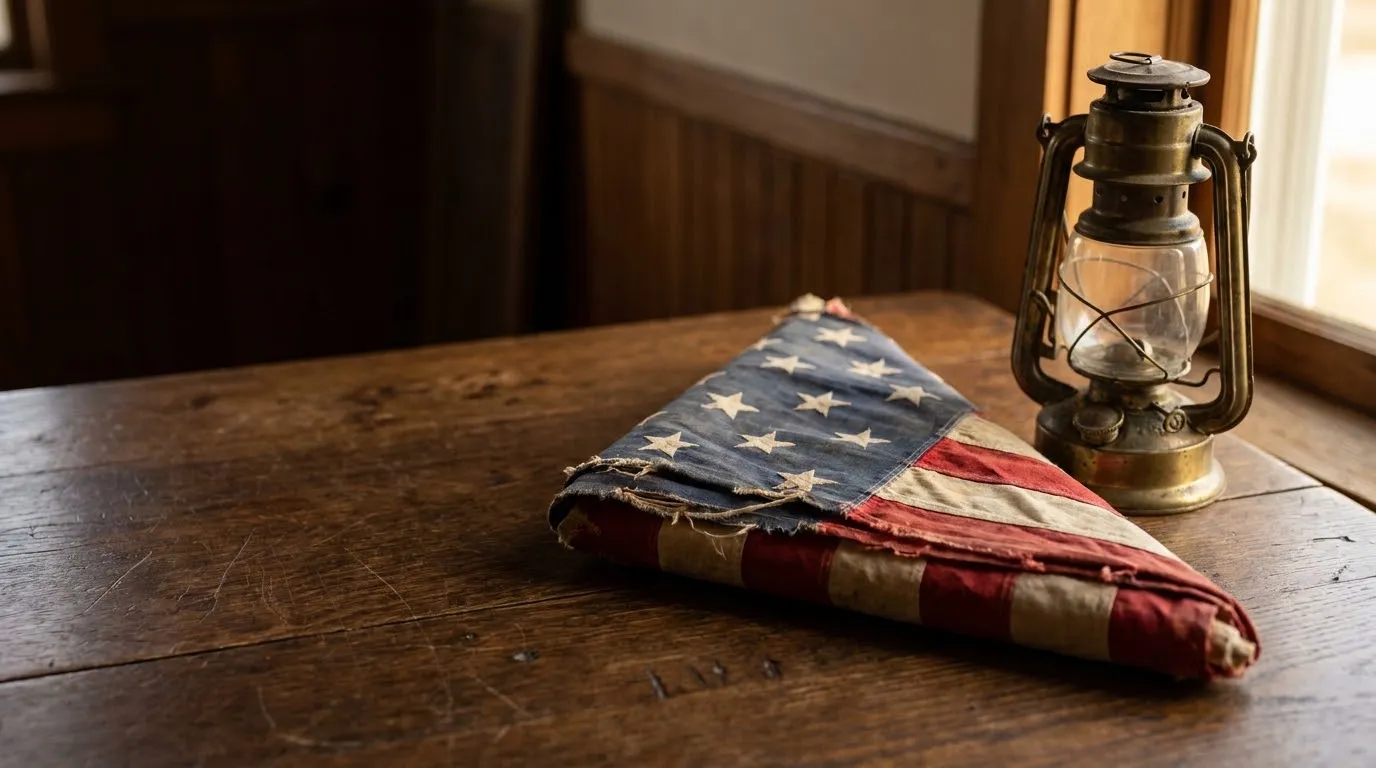
Every American flag flown outdoors eventually shows the marks of wind, sun, and rain. When a banner becomes too frayed, faded, or torn to fly with dignity, retiring it properly is one of the most meaningful customs in our American flag history and symbols guide. Rather than tossing a worn banner into a household trash bin, American tradition treats the end of a flag’s service with the same reverence given to its hoisting.
The federal standard governing flag retirement is found in Title 4, Chapter 1, Section 8(k) of the United States Code, part of the broader U.S. Flag Code. Enacted by Congress on June 22, 1942, the statute states:
“The flag, when it is in such condition that it is no longer a fitting emblem for display, should be destroyed in a dignified way, preferably by burning.”
Two details in that single sentence shape every legitimate retirement method:
- Dignified destruction is the core principle: The statute specifies that the flag should be retired in a “dignified way” and lists burning as the preferred method, not the exclusive one. That wording allows veterans organizations and private citizens to adapt to local fire restrictions and modern synthetic fabrics without violating the code.
- The Flag Code is an advisory civilian standard: As outlined across Title 4, Sections 5 through 10, the Flag Code uses the word “should” rather than mandatory criminal language. It carries no fines, criminal penalties, or enforcement mechanisms for civilians. Following proper flag etiquette when retiring a worn banner is a voluntary act of respect for the nation and the service members who have stood beneath its colors.

How to tell when a flag is ready for retirement
The Flag Code leaves the judgment of when a banner is “no longer a fitting emblem for display” to its owner or custodian. Because outdoor flags face vastly different climates, a flag flown daily along a windy coastline may wear out in six months, while a porch flag flown only on patriotic holidays can last for decades.
Inspect your flag periodically for these practical signs that it is time to retire or repair it:
- Tattered or frayed fly end: The outer edge of the flag farthest from the pole (the fly end) absorbs the brunt of wind whip. Once the hem unravels and the red and white stripes begin splitting or losing length, the flag should be taken down. If caught early on an oversized flagpole banner, a seamstress can sometimes trim and re-hem the fly edge, provided the overall proportions remain balanced.
- Severe fading from ultraviolet light: Sunlight gradually bleaches red stripes to pale orange or pink and fades the deep navy union to light gray. When the colors are no longer distinct from a short distance, the banner has completed its outdoor service.
- Permanent stains, mildew, or rot: Heavy soot, rust bleed from metal grommets, or deep mildew that does not come out after gentle washing indicates the flag should be retired.
- Torn grommets or ripped header canvas: If the heavy canvas heading rips away from the fabric body and cannot be cleanly mended, the flag is no longer safe to fly.
The myth about a flag touching the ground
One of the most frequent questions homeowners ask is whether they must burn an American flag if it accidentally brushes the ground while being lowered or folded. You do not need to destroy a flag just because it touched the ground.
Under 4 U.S.C. § 8(b), the code states that “the flag should never touch anything beneath it, such as the ground, the floor, water, or merchandise.” As The American Legion explains in its official flag FAQ, this provision requires care and attention when handling the banner. If a corner slips and touches the lawn, pavement, or porch floor, pick it up immediately and inspect the fabric. If it is clean, continue flying or folding it. If it picked up mud or dust, wash it gently with mild soap and water or have it dry-cleaned. Many dry cleaners across the United States offer complimentary cleaning for American flags.
Similarly, retire an actual physical flag rather than cutting it up to make clothing or cushions. Under 4 U.S.C. § 8(d), “the flag should never be used as wearing apparel, bedding, or drapery,” and under § 8(j), “no part of the flag should ever be used as a costume or athletic uniform.” Those subsections prohibit turning a cloth flag into a garment, whereas wearing purpose-made American flag shirts or American flag hats printed or embroidered with patriotic artwork is a normal expression of civic pride.
Retirement ceremonies by The American Legion and veterans groups
While a homeowner can conduct a private retirement on personal property where open burning is legal and safe, most Americans entrust their worn flags to veterans and civic organizations. The procedure used across the country originates with The American Legion.
At the 19th National Convention of The American Legion, held in New York City in September 1937, delegates passed Resolution No. 440, establishing the official Ceremony for Disposal of Unserviceable Flags. That 1937 ritual predated Congress’s 1942 adoption of the federal Flag Code by five years and remains the standard framework used by American Legion posts, Veterans of Foreign Wars (VFW) posts, and Scouting America troops.
How a formal flag retirement ceremony works
Posts hold retirement ceremonies outdoors, often in the evening on Flag Day (June 14), when weather and local burn permits allow. According to The American Legion’s published ceremony manual, the observance follows a structured sequence:
- Inspection of collected flags: Members gather the flags collected over the preceding months. The First Vice Commander and Second Vice Commander inspect the banners to verify that they have become faded and worn over time and are no longer serviceable.
- Presentation and remarks: Post members assemble in two parallel rows facing each other, with a small fire burning opposite the commander and beyond the rows of members. A color guard escorts the detail bearing the unserviceable flags toward the fire. The Sergeant-at-Arms, Vice Commanders, and Post Commander speak on the service the flags have rendered over graves and public places.
- Prayer and salute: The Post Chaplain offers a prayer asking for blessing upon the ceremony, and the Post Commander orders a hand salute as the Color Guard presents arms and the assembly stands at attention.
- Dignified burning: Before or during the ceremony, each flag is folded properly using the traditional triangle described in our guide on how to fold an American flag. Moving deliberately, the detail dips the condemned flags in kerosene and places them on a rack over the fire as outlined in the Legion manual so they are completely consumed. While the banners burn, a bugler sounds “To the Colors.”
- Completion of the ceremony: At the conclusion of “To the Colors,” the Commander gives the command to end the salute, the Color Guard resumes its station, and the detail is dismissed.
Where to find American flag drop-off boxes near you
If you have a faded or torn flag at home, turning it in to an organization that conducts ceremonies or partners with an approved facility is the simplest and most respectful choice. You do not need to be a veteran or a member of a post to use their collection boxes.
Look for permanent flag drop-off receptacles—often repurposed mail collection boxes painted red, white, and blue or marked for unserviceable flags—at the following locations:
- American Legion posts: Nearly every local post collects worn flags year-round. Many mount a weatherproof drop box right outside the post entrance so residents can leave flags at any hour.
- Veterans of Foreign Wars (VFW) and AMVets posts: Local VFW halls accept worn flags from the public and either retire them on-site or coordinate joint ceremonies with neighboring civic groups.
- Scouting America (Boy Scouts) and Girl Scout troops: Local scout councils and troops regularly collect unserviceable flags from neighborhoods to conduct supervised retirement ceremonies at camporees, where scouts learn outdoor safety and civic responsibility.
- Municipal buildings, libraries, and fire stations: Many city halls, county clerk offices, public libraries, and local fire departments maintain collection bins in their lobbies in partnership with local veterans posts.
- Hardware stores and flag retailers: Several national hardware chains and dedicated flag manufacturers accept worn flags at their customer service counters for ceremonial disposal.
Before placing a flag in a community drop box, fold it neatly if possible. If the flag is wet from rain or snow, let it dry indoors first so it does not cause mildew across the other flags waiting inside the collection bin.
Cautions when retiring synthetic nylon and polyester flags
When The American Legion drafted its ceremony in 1937 and Congress passed the Flag Code in 1942, virtually every American flag was woven from natural fibers: cotton, wool bunting, or linen. Natural fibers burn cleanly in a hot wood fire, reducing quickly to harmless wood and cellulose ash.
Today, the majority of outdoor American flags are engineered as all-weather banners under 4 U.S.C. § 6(c) using nylon or polyester. As The American Legion notes in its Flag Advocacy FAQ, while synthetic materials resist rain and ultraviolet fading far better than cotton, they present disposal challenges when placed in an open fire:
- Harmful gases and smoke: Nylon and polyester are difficult to dispose of by burning and can release harmful gases when burned in an open fire.
- Environmental and regulatory concerns: Because of these emissions, federal, state, and local agencies—including the Environmental Protection Agency—have concerns about burning synthetic flags outdoors, and many local jurisdictions restrict open burning of synthetic materials.
- Non-biodegradable materials: Burying nylon or polyester flags is also not recommended by The American Legion, because synthetic materials are not biodegradable in the soil.
Respectful alternatives for synthetic flags
Because of the environmental concerns surrounding open burning and burial of nylon and polyester, The American Legion outlines dignified options that satisfy the “dignified way” standard of 4 U.S.C. § 8(k):
- Local American Legion post ceremonies: Contact your local American Legion post to find out if they hold Unserviceable Flag Ceremonies (usually on or around Flag Day, June 14, each year) and accept worn flags from the community.
- Licensed high-temperature incineration services: Look for a licensed disposal service that can safely incinerate synthetic materials at high temperatures while allowing for a dignified retirement ceremony.
- Funeral home cremation or local government guidance: Some funeral homes accept worn flags for cremation with a veteran, and citizens can also check with local or state authorities for guidance on approved disposal options in their area.
Step-by-step guide to conducting a private flag retirement
If you have a 100 percent cotton flag, live in a jurisdiction where outdoor fires are permitted, and wish to retire a family banner privately on your own property, follow these steps to keep the observance safe and respectful:
- Verify fabric and fire rules: Check the white canvas header on your flag to confirm it is 100 percent cotton (never burn nylon or polyester at home). Check county fire advisories to ensure no burn ban or high-wind warning is in effect, and keep a water source and shovel next to the fire pit.
- Build a hot, established fire: Start a clean hardwood fire and allow it to burn down to a bed of intense glowing coals and steady flames. A weak or smoky fire will char a heavy cotton flag rather than consuming it completely.
- Remove metal hardware if preferred: While brass grommets do not burn and can be retrieved from the cold ashes later, you may carefully snip the metal grommets out of the canvas header beforehand so only natural cloth enters the fire.
- Fold the flag into a triangle: With a family member or friend assisting, fold the flag lengthwise twice and then in triangular folds from the striped fly end toward the blue union so only the blue starry field is visible on the outside. Keeping the flag folded prevents sudden updrafts from lifting burning embers into the air.
- Place the flag on the fire and render honors: Place the folded triangle squarely in the center of the coals. Step back, stand at attention, place your right hand over your heart (or render the military salute if you are an active-duty service member or veteran), and recite the Pledge of Allegiance or observe a quiet moment of reflection.
- Wait until combustion is complete: Never walk away while recognizable pieces of the flag remain unburned. Stay beside the fire until the cotton has turned completely to ash.
- Bury the cooled ashes: Once the fire is completely out and cold to the touch, gather the ashes and any remaining brass grommets and bury them in a quiet spot in your yard or garden.
Frequently asked questions
What is the proper way to dispose of an old American flag?
Under 4 U.S.C. § 8(k), when an American flag is so worn or soiled that it is no longer a fitting emblem for display, it should be destroyed in a dignified manner, preferably by burning. For cotton or wool flags, this is traditionally done in a solemn retirement ceremony where the flag is placed on a fire until completely consumed. For synthetic flags, turning the banner in to a local American Legion post or licensed high-temperature disposal service is recommended.
Where can I drop off a worn American flag for disposal?
Most communities have permanent flag drop-off boxes located at American Legion posts, Veterans of Foreign Wars (VFW) halls, local town halls, county government buildings, libraries, and fire stations. Scouting America troops and Girl Scout councils also collect worn flags throughout the year. These organizations store the collected banners until they can conduct an official retirement ceremony or coordinate with an approved high-temperature disposal facility.
Is it safe to burn a nylon or polyester American flag at home?
No. While the 1942 Flag Code recommends burning, that guideline was written when flags were made of natural cotton or wool. Most modern outdoor flags are manufactured from nylon or polyester, which are difficult to dispose of by burning and can release harmful gases. Federal, state, and local agencies—including the Environmental Protection Agency—have concerns about burning synthetic flags, so they should be turned in to a local American Legion post or licensed disposal service.
Can an American flag be buried instead of burned?
Title 4 U.S.C. § 8(k) states that an unserviceable flag should be destroyed in a dignified way, preferably by burning. However, The American Legion specifically advises against burying modern nylon or polyester flags because synthetic materials are not biodegradable. Instead of burying a synthetic flag, contact a local American Legion post, a licensed high-temperature incineration service, or a funeral home that accepts flags for cremation with a veteran.
Does an American flag have to be burned if it touches the ground?
No. The belief that a flag must be destroyed the moment it touches the ground is a common myth. Section 8(b) of the Flag Code advises that the flag should never touch anything beneath it, such as the ground, floor, water, or merchandise, as a rule of careful handling. If a flag accidentally drops onto the ground, simply pick it up, brush off any loose dirt, and wash or dry-clean it if needed before flying it again.
How should an individual citizen retire a flag when no ceremony is available?
Under 4 U.S.C. § 8(k), an unserviceable flag should be destroyed in a dignified way, preferably by burning. As The American Legion notes, when an individual citizen retires a natural-fiber flag privately, it should be done discreetly so that the act of destruction is not perceived as a protest or desecration. For nylon or polyester flags, check with local or state authorities or a local American Legion post for approved disposal options.
Can I repurpose an old American flag into clothing or a quilt?
No. Repurposing an actual cloth flag into apparel, pillows, or bedding goes against Title 4, Section 8(d) of the U.S. Flag Code, which states that the flag should never be used as wearing apparel, bedding, or drapery, and Section 8(j), which states that no part of the flag should be used as a costume. While wearing commercially printed patriotic shirts is fine, a retired physical banner should be ceremonially retired rather than cut into garments.