Flag Day Origins, the 1777 Resolution, and Modern Observance
Flag Day is observed nationwide on June 14 to commemorate the Second Continental Congress passing the official Flag Resolution on June 14, 1777. Established as an annual statutory observance when President Harry S. Truman signed an Act of Congress in 1949 under Title 36, Section 110 of the United States Code, Flag Day encourages civic pride, historical study, and proper flag display.
Flag Day Origins, the 1777 Resolution, and Modern Observance tool
On this page
The 1777 Flag Resolution and the Birth of Old Glory
Every year on June 14, Americans pause to recognize the primary visual emblem of their republic. Across the annual calendar of patriotic holidays, Flag Day provides a focused opportunity to study American history, understand the national symbol, and renew standards of civic etiquette.
The origin of Flag Day dates back to the Second Continental Congress meeting in Philadelphia during the Revolutionary War. Prior to June 1777, American colonial forces carried various regimental and regional flags into combat, including the Grand Union Flag, the Pine Tree Flag, and diverse rattlesnake banners. Seeking a unified standard for naval vessels and military forces, Congress passed a brief but transformative resolution on June 14, 1777:
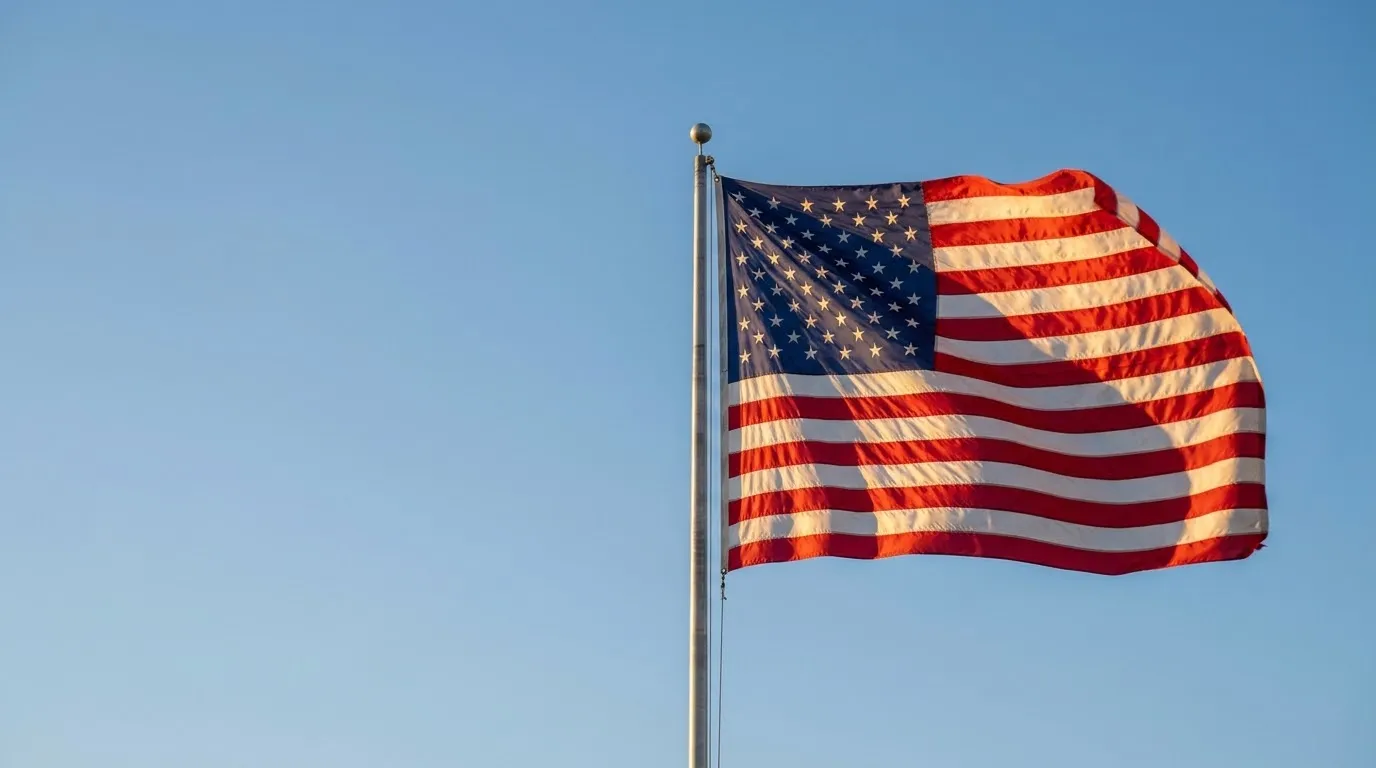
“Resolved, That the flag of the thirteen United States be thirteen stripes, alternate red and white; that the union be thirteen stars, white in a blue field, representing a new constellation.”
Recorded in the Journals of the Continental Congress by Secretary Charles Thomson, this single sentence established the core elements of the Stars and Stripes. While popular folklore credits Philadelphia seamstress Betsy Ross with sewing the first flag, historical records indicate New Jersey delegate and Declaration signer Francis Hopkinson likely designed the initial layout. Over the following two centuries, as new states joined the union, the blue canton expanded from thirteen stars to fifty, while the thirteen stripes remained constant to honor the founding colonies.

The Grassroots Movement and the 1949 Federal Law
Although the Continental Congress authorized the flag in 1777, more than a century passed before Flag Day gained widespread public recognition. The movement to establish a national day of commemoration began at the grassroots level among passionate schoolteachers, veterans, and civic educators.
In 1885, nineteen-year-old Wisconsin schoolteacher Bernard J. Cigrand arranged for his students to hold a Flag Birthday celebration on June 14. Cigrand went on to write hundreds of articles and deliver public lectures advocating for a permanent national holiday, earning him wide recognition as the father of Flag Day. Around the same time, in 1889, New York kindergarten teacher George Balch organized flag ceremonies for his classes, establishing patterns soon adopted by the New York State Board of Education.
The first official national recognition occurred on May 30, 1916, when President Woodrow Wilson issued a presidential proclamation calling for nationwide observance of Flag Day on June 14. President Calvin Coolidge issued a similar proclamation in 1927.
Permanent statutory recognition arrived in the aftermath of World War II. On August 3, 1949, President Harry S. Truman signed an Act of Congress (Public Law 81-203), permanently establishing June 14 of each year as Flag Day. This law is codified today under Title 36, Section 110 of the United States Code, which requests the President to issue an annual proclamation urging citizens to display the flag and observe the day with appropriate commemorative ceremonies.
National Flag Week and Modern Civic Observance
In 1966, Congress expanded the scope of Flag Day by passing Public Law 89-443, codified under 36 U.S.C. § 122. This statute authorizes the President to issue an annual proclamation designating the entire calendar week in which June 14 falls as National Flag Week.
During National Flag Week, civic organizations, schools, historical societies, and municipal leaders coordinate educational programs that emphasize the meaning of constitutional liberty and national unity. Typical observances include:
- Flag Retirement Ceremonies: Scout troops, American Legion posts, and Veterans of Foreign Wars halls frequently host solemn flag retirement ceremonies on June 14, following proper burning procedures outlined in Title 4, Section 8(k) of the United States Code.
- Naturalization Ceremonies: Federal courts often schedule naturalization oaths on Flag Day, welcoming new citizens as they wave small American flags and take the Oath of Allegiance.
- Classroom History Lessons: Summer schools and community centers hold workshops teaching young citizens the historical evolution of the flag from 1777 to the present day.
- Residential Flag Displays: Homeowners across suburban neighborhoods and rural communities raise all-weather nylon and polyester flags from porch brackets and freestanding yard poles.
Unlike federal legal public holidays under Title 5, Section 6103, Flag Day does not close federal banks, executive agencies, or mail delivery. Pennsylvania is the only state in the union that designates Flag Day as an official legal state holiday, having enacted the statute in 1937.
Essential Flag Etiquette for June 14
Flag Day serves as an annual reminder of the etiquette standards codified in Title 4, Chapter 1 of the United States Code, commonly known as the United States Flag Code. First adopted by Congress on June 22, 1942, under Public Law 77-623, the code sets forth advisory customs for honoring the national flag.
Here are the essential display rules homeowners and business owners should follow on Flag Day:
- Sunrise to Sunset: The flag is traditionally displayed outdoors from sunrise to sunset. However, Title 4, Section 6(a) permits displaying the flag twenty-four hours a day if it is properly illuminated with dedicated lighting during darkness.
- Weather Protection: Never display a flag in severe rain, snow, or storm winds unless flying an all-weather synthetic flag designed specifically for high-wind conditions.
- Hoisting and Lowering: Always hoist the flag briskly and lower it slowly and ceremoniously.
- No Ground Contact: Take care that the flag never touches anything beneath it, such as the ground, the floor, water, or merchandise.
- Position of Honor: When displayed against a wall or in a window, the blue union field of stars should be uppermost and to the flag’s own right—which is to the observer’s left.
For an extensive review of federal statutory rules, read our dedicated guides on the US Flag Code and proper flag etiquette.
Wearing Flag-Inspired Apparel on Flag Day
Beyond hoisting a flag on your home flagpole, many Americans choose to show their patriotism on June 14 by wearing tasteful red, white, and blue apparel.
A common question that arises around Flag Day is whether wearing flag-themed clothing violates Title 4, Section 8(d) of the Flag Code, which states that “the flag should never be used as wearing apparel, bedding, or drapery.” As clarified by The American Legion and constitutional legal authorities, this statutory restriction applies strictly to an actual physical flag. An authentic flag designed for flagpole flight should never be refashioned into garments, costumes, or athletic uniforms.
Clothing manufactured with patriotic graphics, vintage stars and stripes prints, or founding motifs does not violate the Flag Code because it was never an actual consecrated flag. Choosing a premium, well-crafted American flag shirt or an embroidered American flag hat allows you to celebrate Flag Day respectfully while observing normal civic customs.
By participating in Flag Day on June 14, Americans honor the founding resolution of 1777, celebrate more than two centuries of national heritage, and pass down essential standards of respect to future generations.
Evolution of the Star Pattern: From 13 Stars to 50
The original 1777 Flag Resolution established thirteen stripes and thirteen stars, but it left the specific arrangement of the stars open to interpretation. As new states entered the fledgling Union after the Revolutionary War, Congress had to decide how the national flag would accommodate American growth.
In 1794, following the admission of Vermont and Kentucky, Congress passed the Second Flag Act, which temporarily increased the flag to fifteen stripes and fifteen stars. This fifteen-stripe banner flew over Fort McHenry during the War of 1812, inspiring Francis Scott Key to pen the lyrics to The Star-Spangled Banner. However, as more states joined the Union, adding additional stripes proved impractical, threatening to distort the flag’s proportions.
On April 4, 1818, President James Monroe signed the Third Flag Act into law. This pivotal statute permanently fixed the number of alternating stripes at thirteen to honor the founding colonies, and mandated that a new star be added for each newly admitted state on the Fourth of July immediately following its formal admission. This elegant formula allowed the flag to grow organically alongside the republic while preserving its founding geometry. Today’s fifty-star design, designed following the admission of Hawaii in 1959, has flown continuously since July 4, 1960.
Frequently asked questions
When was Flag Day first created?
Flag Day commemorates the June 14, 1777 resolution of the Continental Congress. Local schoolteachers and civic leaders, including Bernard J. Cigrand in 1885, championed grassroots celebrations for decades. President Woodrow Wilson issued the first national proclamation in 1916, and President Harry S. Truman signed federal legislation in 1949 establishing June 14 as permanent Flag Day.
Is Flag Day a federal public holiday with government closures?
Flag Day is a federally recognized statutory observance under Title 36, Section 110 of the United States Code, but it is not a legal public holiday under Title 5, Section 6103. Consequently, federal government offices, postal branches, and stock exchanges remain open for normal business on June 14. Pennsylvania remains the only state designating Flag Day as a legal state holiday.
What is National Flag Week?
In 1966, Congress enacted Public Law 89-443, requesting the President to issue an annual proclamation designating the calendar week in which June 14 falls as National Flag Week. During this week, citizens and businesses across the nation are urged to display the American flag outside homes, schools, and civic buildings to foster patriotism and civic responsibility.
What does the Flag Code say about displaying the flag on Flag Day?
Title 4, Section 6 of the United States Code specifies that the flag should be displayed on all days, especially on patriotic occasions including Flag Day, June 14. Section 6 also details proper display times and weather rules, directing that the flag be raised briskly at sunrise and lowered ceremoniously at sunset, or illuminated if flown outdoors around the clock in suitable weather.
What is the difference between Flag Day and the Fourth of July?
Flag Day specifically honors the creation, design, and adoption of the American flag by the Second Continental Congress in 1777, focusing on the symbol itself and proper etiquette. The Fourth of July celebrates the political declaration of national independence from Great Britain in 1776, marking the founding of the nation with paid federal holiday status, parades, and fireworks.