National Pearl Harbor Remembrance Day: History, Flag Protocol, and 2026–2027 Dates
National Pearl Harbor Remembrance Day is observed annually on December 7 to honor the more than 2,400 Americans killed during the surprise attack on Pearl Harbor and Oahu military airfields on December 7, 1941. Codified under Title 36, Section 129 of the United States Code, the observance falls on Monday, December 7, 2026, and Tuesday, December 7, 2027, and calls for the United States flag to fly at half-staff from sunrise until sunset.
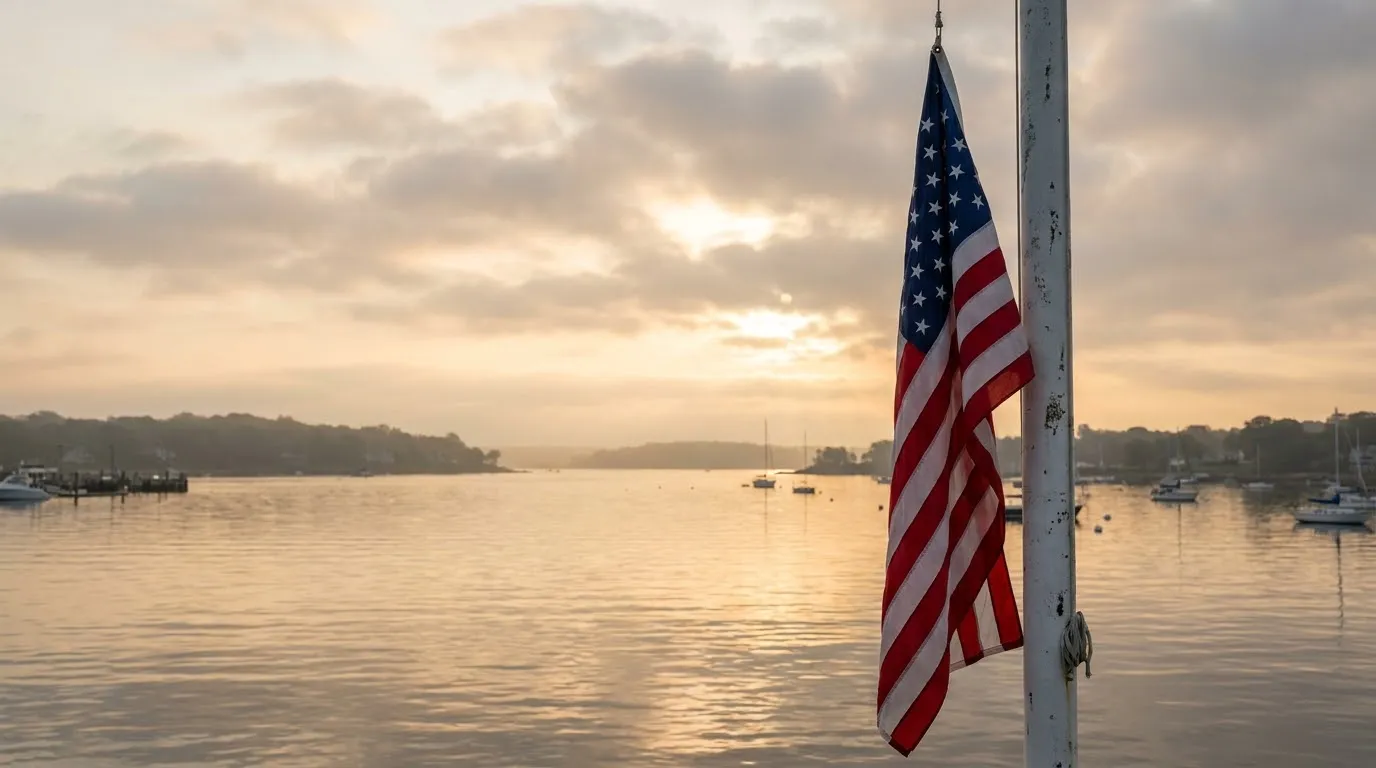
National Pearl Harbor Remembrance Day: History, Flag Protocol, and 2026–2027 Dates tool
On this page
What National Pearl Harbor Remembrance Day honors
On the annual calendar of American patriotic holidays and solemn national observances, December 7 stands as a day of deep reflection. Designated by Congress as National Pearl Harbor Remembrance Day, the observance honors the more than 2,400 Americans who lost their lives during the surprise military attack on Pearl Harbor and the island of Oahu on December 7, 1941.
Beyond mourning the immediate casualties of that Sunday morning, December 7 commemorates the resilience of the armed forces and civilian defenders who responded under fire, the salvage crews who raised the Pacific Fleet from the harbor floor, and the sixteen million Americans who served in uniform during World War II. Marking the day with half-staff flags and moments of silence ensures that the sacrifices made at the opening of America’s participation in the Second World War remain preserved in national memory.

December 7, 1941: Verified facts of the attack on Oahu
Historical records maintained by the National Park Service at Pearl Harbor National Memorial and The National WWII Museum document how the events of December 7, 1941, unfolded across Oahu, Territory of Hawaii.
The two-wave aerial assault
Throughout 1941, diplomatic tensions between the United States and the Empire of Japan escalated over Japanese military expansion in China and French Indochina, prompting American economic sanctions and an oil embargo. Seeking to neutralize the United States Pacific Fleet before expanding across Southeast Asia and the Pacific, the Imperial Japanese Navy dispatched a strike force of six aircraft carriers across the North Pacific under Vice Admiral Chuichi Nagumo.
Early on Sunday morning, December 7, 1941, the Japanese carrier fleet launched 353 aircraft in two successive waves from roughly 230 miles north of Oahu. Before hitting the ships moored in Pearl Harbor, Japanese fighters and bombers simultaneously struck American military airfields across the island, including Hickam Field, Wheeler Field, Bellows Field, Ewa Mooring Mast Field, Kaneohe Naval Air Station, and Ford Island, to prevent U.S. Army Air Forces and Navy aircraft from mounting an aerial defense.
At 7:55 a.m. Hawaiian Time, the first wave of torpedo bombers and dive-bombers struck the warships moored along Ford Island, including the line of eight battleships known as Battleship Row. A second strike wave arrived approximately an hour later, and the entire attack concluded just before 10:00 a.m.
American casualties across branches and civilians
According to the National WWII Museum, the attack killed more than 2,400 Americans, including military personnel and civilians across the island. The National Park Service reports that 1,177 crewmen of the battleship USS Arizona lost their lives.
Ships and aircraft lost and salvaged
Eight battleships were damaged, with several sinking or being forced aground, and 188 American aircraft were destroyed. The eight battleships in Pearl Harbor that suffered damage were USS Arizona, USS Oklahoma, USS West Virginia, USS California, USS Nevada, USS Pennsylvania, USS Tennessee, and USS Maryland.
Despite the devastation along Battleship Row, the attack failed to cripple the Pacific Fleet permanently. None of the Pacific Fleet’s three aircraft carriers (USS Enterprise, USS Lexington, and USS Saratoga) were in port that morning, and the Japanese strike force left Pearl Harbor’s vital shore-side fuel oil tank farms, submarine base, and drydock repair yards largely intact. In an extraordinary engineering effort, Navy salvage teams raised and repaired six of the eight battleships (Nevada, West Virginia, California, Maryland, Tennessee, and Pennsylvania), returning them to combat duty during World War II. Only the USS Arizona, the USS Oklahoma, and the former battleship and target training vessel USS Utah never returned to service.
On Monday, December 8, 1941, President Franklin D. Roosevelt addressed a joint session of Congress, declaring December 7, 1941, “a date which will live in infamy.” Within an hour, Congress approved a formal declaration of war against Japan, uniting the country for the four-year struggle of World War II.
36 U.S.C. 129 and the half-staff flag request
For more than five decades after 1941, Pearl Harbor survivors and veterans groups organized annual December 7 memorials across the nation. In 1994, ahead of the fiftieth anniversary of the end of World War II, the 103rd Congress passed Joint Resolution 103-308, signed into law by President Bill Clinton on August 23, 1994, establishing National Pearl Harbor Remembrance Day as a permanent statutory observance.
When Congress revised and recodified Title 36 in 1998 (Public Law 105-225), the statute was placed at Title 36, Section 129 of the United States Code.
What the statute directs
Title 36, Section 129 contains two concise subsections:
- Subsection (a) Designation: Officially designates December 7 as National Pearl Harbor Remembrance Day.
- Subsection (b) Proclamation: Requests the President to issue an annual proclamation calling on the people of the United States to observe the day with appropriate ceremonies and activities, and calling on “all departments, agencies, and instrumentalities of the United States Government, and interested organizations, groups, and individuals, to fly the flag of the United States at halfstaff each December 7 in honor of the individuals who died as a result of their service at Pearl Harbor.”
Proper half-staff flag etiquette on December 7
Unlike Memorial Day, when the flag flies at half-staff until noon and is then raised to full-staff, National Pearl Harbor Remembrance Day is a full-day half-staff observance from sunrise until sunset.
Under the United States Flag Code (4 U.S.C. 7(m)), the proper procedure for flying the flag at half-staff on December 7 is:
- Morning Hoisting: At sunrise, hoist the flag briskly all the way to the peak of the staff for an instant, then lower it slowly and ceremoniously to the half-staff position (one-half the distance between the top and bottom of the staff).
- Daytime Display: Keep the flag at the half-staff position throughout the day. If the POW/MIA flag or a state flag is flown on the same halyard or an adjacent pole, lower it as well so no banner flies above the United States flag.
- Evening Lowering: At sunset, hoist the flag briskly back to the peak of the staff for an instant before lowering it slowly and respectfully into waiting hands for folding.
Homeowners whose porch-mounted flagpoles use a fixed 45-degree bracket that cannot be lowered to half-staff can attach a black mourning streamer to the spearhead at the top of the pole to participate in the observance. For complete residential flag rules, see our guide on flag etiquette.
Dates for 2026 (this December) and 2027
Because National Pearl Harbor Remembrance Day commemorates the exact historical date of December 7, 1941, it is always observed on December 7 regardless of the day of the week:
- 2026 Date (This December): Monday, December 7, 2026, which marks the 85th anniversary of the 1941 attack on Pearl Harbor.
- 2027 Date: Tuesday, December 7, 2027, marking the 86th anniversary of the attack.
As a Title 36 patriotic observance rather than a federal public holiday under Title 5, Section 6103, December 7 does not close federal executive departments, post offices, banks, or public schools. Instead, public schools, military bases, and civic groups integrate remembrance ceremonies into the regular weekday schedule.
How National Pearl Harbor Remembrance Day is observed
Every December 7, the central national ceremony is co-hosted by the National Park Service and the United States Navy at Pearl Harbor National Memorial in Honolulu, Hawaii, overlooking the sunken hull of the USS Arizona and the white memorial structure spanning the ship’s midships section.
Traditions at the Hawaii ceremony and across the mainland United States include:
- The 7:55 a.m. Moment of Silence: At exactly 7:55 a.m. Hawaiian Time, attendees pause for a minute of silence marking the moment the first bombs fell on Oahu. Across the mainland United States, naval stations, state capitols, and veterans halls pause either at 7:55 a.m. local time or at 12:55 p.m. Eastern Time (7:55 a.m. in Hawaii).
- Pass-in-Review and Missing Man Flyover: A U.S. Navy guided-missile destroyer renders honors to the USS Arizona Memorial from the harbor channel while crew members man the rails in dress uniform, accompanied by a Hawaii Air National Guard Missing Man formation flyover, rifle volleys, and the playing of Taps.
- Wreath-Laying Ceremonies: Official wreaths are placed before the Shrine Room wall inside the USS Arizona Memorial, where the names of the 1,177 crewmen killed aboard the battleship are engraved in marble, as well as at the USS Oklahoma and USS Utah memorials on Ford Island and at the National WWII Memorial in Washington, D.C.
- Educational Programs: Museums including The National WWII Museum in New Orleans and local historical societies livestream oral histories of Pearl Harbor survivors and World War II veterans for classrooms nationwide.
Respectful attire for December 7 remembrance ceremonies
Like Memorial Day and Veterans Day, National Pearl Harbor Remembrance Day is a solemn occasion centered on mourning fallen service members and honoring World War II veterans. If you attend a December 7 wreath-laying ceremony at a naval memorial, veterans post, or community park, choose understated and dignified attire.
Clean, subdued layers work best for early December weather:
- Classic Navy and Dark Neutrals: Navy blue, charcoal, and black cotton tees layered beneath a warm jacket or coat fit the quiet dignity of a memorial service.
- Understated Patriotic Apparel: Our American flag shirts and embroidered American flag hats feature classic Stars and Stripes artwork without loud party slogans, making them appropriate for everyday civic remembrance and visiting historic sites.
By lowering the American flag to half-staff from sunrise to sunset on Monday, December 7, 2026, and Tuesday, December 7, 2027, and pausing to remember the more than 2,400 lives lost on Oahu in 1941, Americans uphold a vital tradition of gratitude and historical stewardship.
Frequently asked questions
What happened on December 7, 1941, at Pearl Harbor?
Just before 8:00 a.m. Hawaiian Time on Sunday, December 7, 1941, two waves of 353 Imperial Japanese Navy bombers, fighters, and torpedo planes launched from six aircraft carriers attacked the U.S. Pacific Fleet at Pearl Harbor and military airfields across Oahu. The surprise assault killed more than 2,400 Americans, damaged eight battleships, and brought the United States directly into World War II.
When is National Pearl Harbor Remembrance Day in 2026 and 2027?
National Pearl Harbor Remembrance Day is observed every year on December 7. This December, the observance takes place on Monday, December 7, 2026, marking the 85th anniversary of the 1941 attack. Next year, the observance falls on Tuesday, December 7, 2027. Because it is a statutory national observance under Title 36 rather than a Title 5 federal public holiday, the date never shifts to a different weekday.
Are flags flown at half-staff on Pearl Harbor Remembrance Day?
Yes. Under Title 36, Section 129(b) of the United States Code, Congress requests the President to issue an annual proclamation calling on all federal departments, agencies, and interested citizens and organizations to fly the United States flag at half-staff each December 7. Unlike Memorial Day, when the flag rises to full-staff at noon, the flag remains at half-staff from sunrise until sunset on December 7.
Is Pearl Harbor Remembrance Day a federal holiday with government closures?
National Pearl Harbor Remembrance Day is a national observance established under 36 U.S.C. 129, not a legal public holiday for federal employees under 5 U.S.C. 6103. Federal government offices, United States Postal Service branches, banks, schools, and financial markets remain open for regular operations on December 7 while military installations, national memorials, and civic organizations hold morning remembrance ceremonies.
Why is the moment of silence held at 7:55 a.m. on December 7?
Commemorative ceremonies at Pearl Harbor National Memorial and across the United States observe a solemn moment of silence at 7:55 a.m. Hawaiian Time (12:55 p.m. Eastern Time). That exact minute marks the start of the first wave of dive-bomber and torpedo attacks against Ford Island, Hickam Field, Wheeler Field, and Battleship Row on the morning of December 7, 1941.
Which battleships were sunk or returned to service after Pearl Harbor?
All eight U.S. Navy battleships present at Pearl Harbor on December 7, 1941, suffered damage: USS Arizona, USS Oklahoma, USS West Virginia, USS California, USS Nevada, USS Pennsylvania, USS Tennessee, and USS Maryland. Navy salvage crews raised and repaired six of the eight battleships to fight in World War II; only the USS Arizona and the USS Oklahoma (along with the target ship USS Utah) never returned to active fleet service.