Memorial Day Meaning, National Moment, and Observance Attire
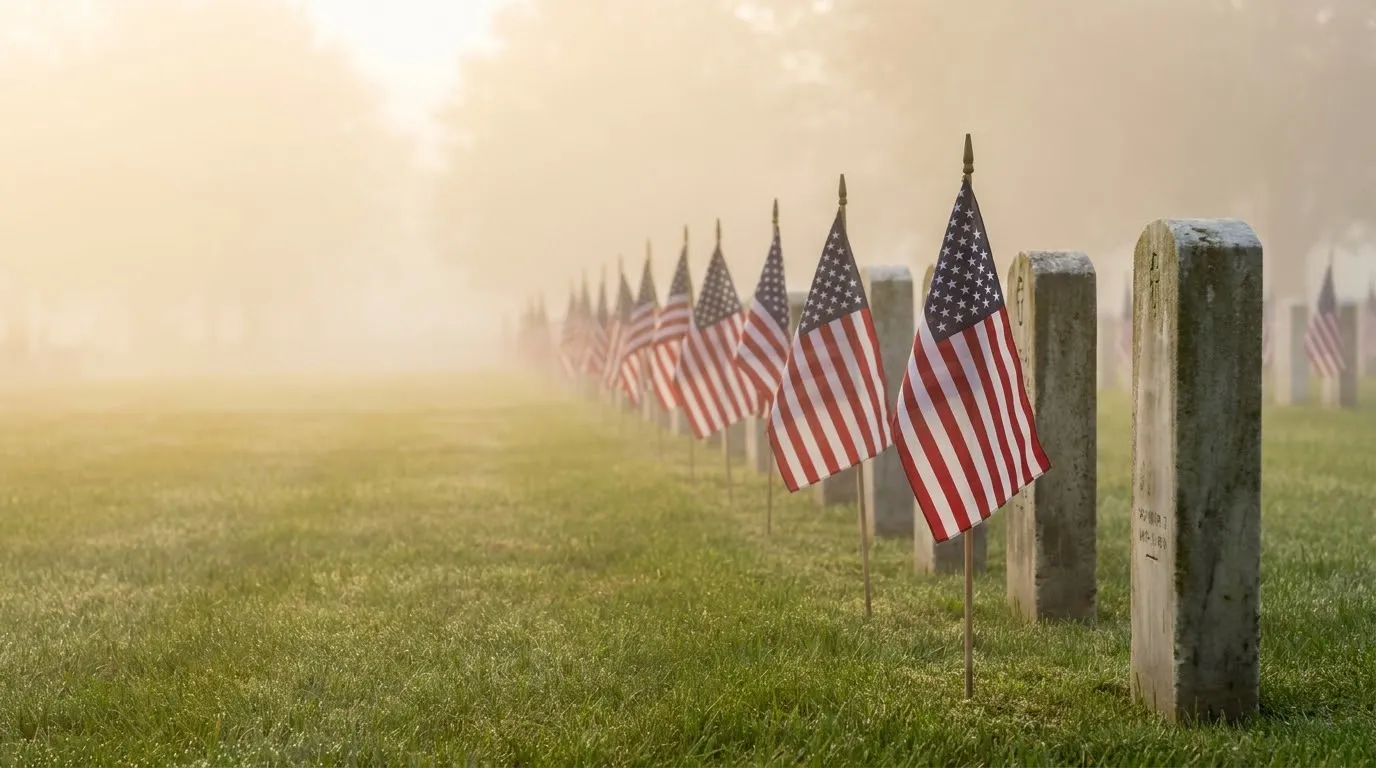
Memorial Day is a solemn national holiday dedicated to remembering and honoring members of the United States Armed Forces who lost their lives in service to our country. Codified under Title 36, Section 116 of the United States Code, Memorial Day is observed annually on the last Monday in May—falling on May 31, 2027—and features the statutory National Moment of Remembrance at 3:00 p.m.
Memorial Day Meaning, National Moment, and Observance Attire tool
On this page
The Sacred Meaning of Memorial Day
Among the national observances and patriotic holidays recognized in the United States, Memorial Day occupies the most solemn position on the calendar.
Memorial Day is not a celebration of military power or a generic kickoff to summer. It is a day of collective national mourning, remembrance, and reverence dedicated exclusively to American service members who lost their lives in military service. Established in the aftermath of the American Civil War, the holiday calls upon all citizens to remember the ultimate sacrifice paid by generations of soldiers, sailors, airmen, Marines, Coast Guardsmen, and Space Force guardians who gave their lives in defense of the Constitution and the nation.
Maintaining the sanctity of Memorial Day requires understanding who the day honors. It is distinct from holidays that celebrate national birth or living veterans. On Memorial Day, Americans come together to ensure that those who died on battlefields, on the high seas, in aerial combat, or during peacetime training missions are never forgotten by the republic they served.

From Decoration Day to a Permanent National Holiday
The origins of Memorial Day trace back to the devastating human loss of the Civil War, which claimed hundreds of thousands of lives. In communities across both North and South during the late 1860s, women and civic groups began gathering in springtime to decorate the graves of fallen soldiers with wild flowers, wreaths, and handwritten notes.
On May 5, 1868, Major General John A. Logan, commander-in-chief of the Grand Army of the Republic—an organization of Union Civil War veterans—issued General Orders No. 11. Logan designated May 30, 1868, “for the purpose of strewing with flowers or otherwise decorating the graves of comrades who died in defense of their country.” The initial national ceremony took place at Arlington National Cemetery, where former Union General and future President James A. Garfield delivered a moving address before attendees strewed flowers and placed miniature flags across graves throughout the cemetery and at the tomb of unknown Civil War dead.
Originally referred to as Decoration Day, the observance steadily expanded over subsequent decades. Following World War I, the holiday broadened beyond the Civil War to honor American service members who died in all armed conflicts. The name Memorial Day gradually replaced Decoration Day in common usage throughout the twentieth century.
In 1968, Congress enacted the Uniform Monday Holiday Act (codified in Title 5, Section 6103 of the United States Code), which moved Memorial Day from its traditional fixed date of May 30 to the last Monday in May, effective in 1971. In 1966, President Lyndon B. Johnson and Congress formally recognized Waterloo, New York, as the official birthplace of Memorial Day, recognizing an early town-wide observance held there on May 5, 1866.
The National Moment of Remembrance: Why We Pause at 3:00 p.m.
As decades passed, concern grew among veterans organizations and historical advocates that the commercialization of the long weekend was eroding public awareness of the day’s true meaning. In response, Congress passed the National Moment of Remembrance Act (Public Law 106-579), signed into law in December 2000.
Codified in notes accompanying Title 36, Section 116 of the United States Code, the Act designates 3:00 p.m. local time on Memorial Day as the National Moment of Remembrance. The statute asks all Americans, wherever they may be at that hour, to voluntarily pause for one full minute of silent reflection and prayer to honor fallen service members.
The hour of 3:00 p.m. was selected intentionally. Mid-afternoon represents a time when most Americans are gathered for family meals, sporting outings, or recreational travel. Pausing amid daily activities creates an intentional, shared moment of national unity and gratitude. Major League Baseball games pause, Amtrak train horns sound, and radio stations broadcast taps or reflective commentary. Participating in this statutory moment is one of the simplest and most profound ways to restore the holiday’s sacred character.
Memorial Day 2027: Date and Observance Calendar
In 2027, Memorial Day falls on Monday, May 31. Because May 1, 2027, occurs on a Saturday, May features five full Mondays (May 3, 10, 17, 24, and 31), making May 31 the official observance date under 5 U.S.C. § 6103.
Key civic schedules for Memorial Day 2027 include:
- Morning Ceremonies: Local memorial parks, national cemeteries, and veterans posts hold solemn memorial services between 9:00 a.m. and 11:00 a.m. The official National Memorial Day Observance takes place at Arlington National Cemetery, featuring the presidential wreath-laying at the Tomb of the Unknown Soldier.
- Flag Protocol Transition at Noon: United States flags are flown at half-staff from dawn until exactly 12:00 p.m. local time, at which point they are raised briskly to full-staff until sunset.
- National Moment of Remembrance: At 3:00 p.m. local time, citizens across every time zone pause for sixty seconds of silence.
- Government Closures: Federal agencies, federal courts, military administrative offices, financial markets, and post offices remain closed throughout Monday, May 31, 2027.
Half-Staff Flag Etiquette on Memorial Day
The United States Flag Code establishes a unique protocol for displaying the American flag on Memorial Day. Codified under Title 4, Section 7(m) of the United States Code, the statutory procedure differs from all other half-staff observances throughout the year.
The proper protocol is as follows:
- Morning Hoisting: Under the Flag Code’s guidance, when raising the flag at sunrise, the flag should first be hoisted briskly to the peak of the staff for an instant, then slowly and solemnly lowered to the half-staff position.
- Half-Staff Period: The flag remains at half-staff until precisely 12:00 noon local time. This period of half-staff display symbolizes the grief and sorrow of the nation mourning the loss of fallen heroes.
- Noon Elevation: At noon, the flag is hoisted briskly back to the full-staff position, where it remains flying proudly until sunset. The afternoon full-staff display signifies that the nation endures, sustained by the sacrifice of its fallen defenders.
- Sunset Lowering: At sunset, the flag is lowered slowly and ceremoniously from the peak, following standard flag retirement etiquette.
If your home flagpole is a fixed pole without halyards for lowering, the Flag Code itself does not address this situation, though attaching a black mourning ribbon to the top of the pole is a custom some people follow. To explore complete residential flag display guidelines, see our comprehensive guide on flag etiquette.
Memorial Day Versus Veterans Day: Honoring the Distinction
A frequent and well-meaning mistake made by the public is wishing veterans a happy Memorial Day or using the day to thank living service personnel. While thanking service members is always commendable, doing so on Memorial Day confuses two distinct statutory observances.
Memorial Day is reserved exclusively for those who died while wearing the cloth of our nation. It is a day of loss, grief, and reverence. Veterans Day, by contrast, is celebrated on November 11 to honor all men and women who served honorably in the armed forces, both living and deceased. On Veterans Day, hearty handshakes, parades, and thank-yous to living veterans are entirely fitting. For a deeper examination of the November holiday, read our dedicated Veterans Day guide.
On Memorial Day, appropriate civic greetings include “have a meaningful Memorial Day,” “wishing you a peaceful day of remembrance,” or simply acknowledging the memory of those who fell.
Respectful Attire for Memorial Day Ceremonies
When attending Memorial Day services, visiting national cemeteries, or participating in civic gatherings, clothing choices should reflect dignity, respect, and reverence. Memorial Day is not an occasion for loud, celebratory party slogans or commercial novelty items.
Subdued and tasteful apparel shows quiet solidarity with Gold Star families and honors the gravity of the occasion:
- Understated Color Choices: Navy, heather navy, black, granite, and athletic heather provide an appropriate foundation for memorial ceremonies.
- Dignified Graphic Design: If wearing patriotic apparel, choose shirts featuring clean founding typography or classic, undistressed flag artwork. Our American flag shirts—printed with a full 13-stripe, 50-star U.S. flag across the chest—and embroidered American flag hats in khaki, stone, or white offer respectful options suited for outdoor remembrance services.
- Comfortable Construction: Cemetery walks and memorial ceremonies often require standing for extended periods in late May heat. Breathable ring-spun cotton fabrics keep you comfortable while maintaining a neat, respectful presentation.
By observing the National Moment of Remembrance at 3:00 p.m., following proper half-staff flag etiquette, and maintaining a solemn spirit of gratitude, every American can ensure the memories of our fallen defenders remain honored and enduring.
Frequently asked questions
What is the true purpose and meaning of Memorial Day?
Memorial Day is set aside exclusively to honor military service members who died in the line of duty defending the United States. Unlike celebratory patriotic occasions, it is a solemn day of national remembrance, gratitude, and mourning. The holiday reminds citizens of the immense human cost paid to protect constitutional liberty and national security throughout American history.
What is the National Moment of Remembrance at 3 p.m.?
Enacted by Congress in December 2000 under Public Law 106-579, the National Moment of Remembrance encourages all Americans, wherever they are at 3:00 p.m. local time on Memorial Day, to pause for one minute of silence. This specific hour was chosen because it represents a time when many families gather, making the pause a unified national gesture of reflection.
What is the date of Memorial Day in 2027?
In 2027, Memorial Day falls on Monday, May 31. Under the Uniform Monday Holiday Act of 1968, which took effect in 1971 and is codified in Title 5 of the United States Code, Memorial Day is observed on the last Monday in May. This ensures a consistent three-day holiday weekend while preserving national commemorative ceremonies.
How should the American flag be displayed on Memorial Day?
According to Title 4, Section 7(m) of the United States Code, the flag should be briskly hoisted to the peak for an instant and then slowly lowered to half-staff, where it remains until noon. At noon, the flag is raised to full-staff for the remainder of the day until sunset, symbolizing the nation rising up through the memory of its fallen defenders.
What is respectful attire to wear when attending Memorial Day observances?
Appropriate attire for Memorial Day ceremonies, cemetery visits, and civic gatherings should reflect reverence, modesty, and dignity. Subdued patriotic apparel—such as clean navy, charcoal, or dark neutral shirts bearing tasteful American flag motifs—is widely accepted. Bright party shirts or commercial sales slogans should be avoided, keeping the focus entirely on solemn remembrance and honoring fallen heroes.